
I knew gorilla trekking would involve time on foot, but I hadn’t expected to enjoy just how much movement was woven into our itinerary, from forest walks to an optional 14km hike through Bwindi
Words and photography: Lauren Murphy
Between jungle treks, heat, safari days, a 14km hike I had somehow not fully registered, and me repeatedly saying I might perish, Uganda became one of the most active trips I’ve ever done. It was also one of the most joyful.
I came with gorillas and chimps at the top of my list. But Uganda quickly became about far more than that: the people, the changing landscapes, the communities, the humour of travelling as a group, and the way my body kept surprising me when I stopped arguing with it quite so much.
This was my first time travelling with Wildplaces Africa, a family-run collection of camps and lodges built over four generations by Jonathan and Pamela Wright. There’s a warmth to their places that you feel straight away. Even in the most remote locations, there was always this feeling of being looked after, while still feeling deeply connected to the landscape around you.
The trip had a rhythm I hadn’t expected. Some days were wonderfully active, with forest treks and an optional 14km hike, while others slowed right down with long game drives and time simply watching the landscape and wildlife unfold around us.
Before I left, I did try to prepare. I walked more, spent more time on my feet, did the odd gym session and some time on the StairMaster, which I hate, but it does do its job. I also did a few gentle hikes in the boots I was taking. What I hadn’t prepared for was the unpredictability: humidity, slippery descents, bugs, long travel days and the stop-start rhythm of safari life.
And then there were the bugs.
I spent most of the trip half-joking that I might perish. I’m probably more at home in a Four Seasons than deep in the forest. By the end of the trip, the group had started calling me Lady Lauren. To be honest, it felt fairly accurate.
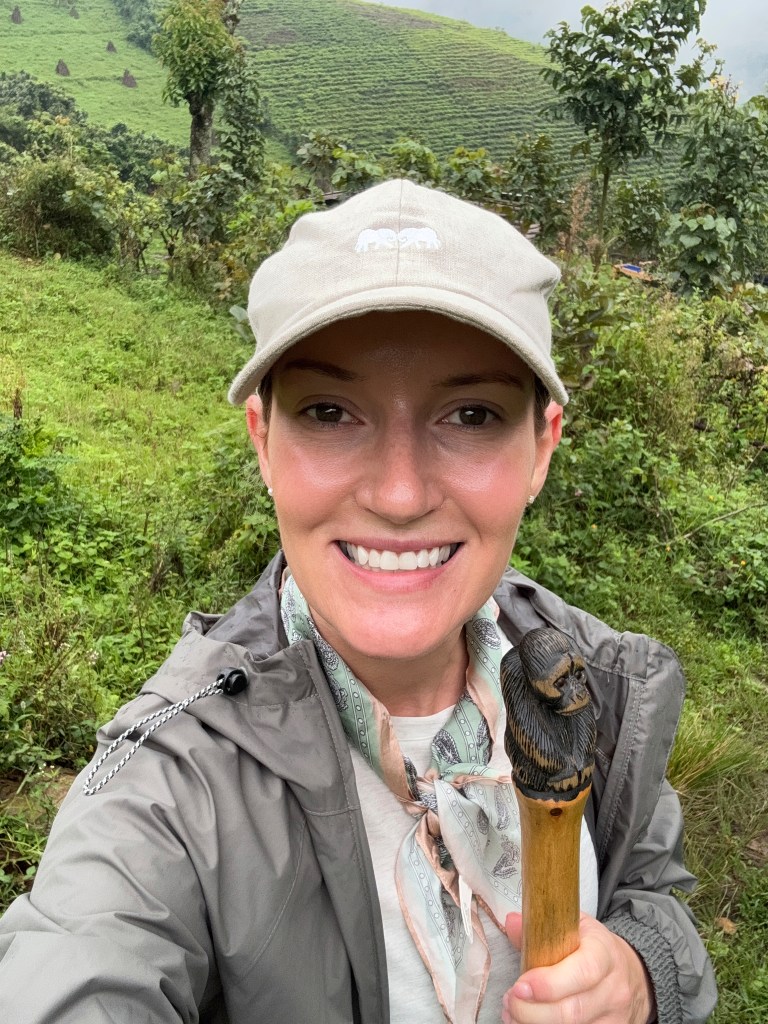
We flew direct with Uganda Airlines from Gatwick to Entebbe and spent the first night at The Boma, where I arrived stiff through my hips and lower back. After a hot shower, I stretched for 10 minutes. Nothing impressive, but it helped. It became something I did every morning. On a trip where you’re either walking, climbing, sitting in safari vehicles or clambering in and out of boats, those small bits of movement matter. Hydration sachets helped too, especially in the heat of Murchison Falls.
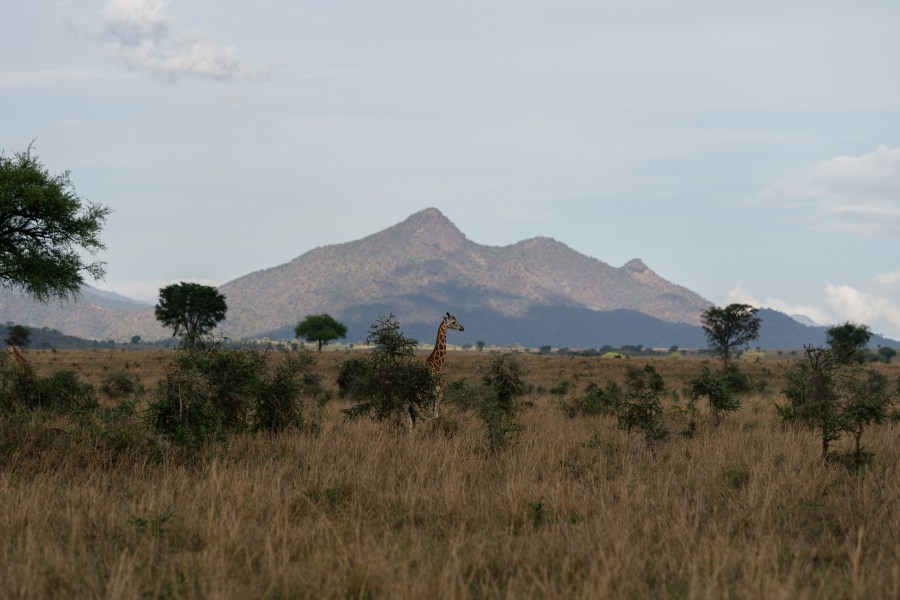
Our first proper stop was Apoka in Kidepo Valley National Park, my first tented camp experience and my first time in Africa. I’d expected one version of safari, but this was mountains, hills, savannah and huge skies. It was wild, open and completely unexpected.
By the time we reached Kulu Ora, Wildplaces Africa’s newest open camp, right on the Nile in Murchison Falls, something shifted. The camp had only just opened and felt quietly luxurious, with the kind of river-facing copper bath Lady Lauren could get on board with.
Kulu Ora was where I realised not all movement had to feel hard. One afternoon, after a morning game drive, I swam slow laps in the pool beside the Nile. The spa was another highlight, with a massage in an open tent and the sound of the river instead of music. It felt like my body was asking for something softer.
At The River Station, the trip softened again, with hippos in the lagoon, elephants moving back to the water in the morning and that wonderful feeling of being completely wrapped up in the landscape. It was one of those places where you didn’t need to do very much to feel part of it. You could sit quietly at camp and the wildlife seemed to move around you.
Then came chimpanzee trekking in Kyambura Gorge, while staying near Honey Bear Bush Camp.
There was no guarantee we would find the chimps quickly, or whether we’d be hiking for half an hour or several. Judith, our guide, handed out walking poles, which I accepted casually and became very attached to about five minutes later.
The descent was steep and slippery. I’d also made a clothing mistake. In an attempt to avoid fire ants, I had layered up: gym leggings, long socks, then hiking trousers. Within 10 minutes, I knew I’d overdone it.
Once we reached the forest floor, the pace picked up. We crossed the river on a makeshift raft, then continued through the forest. In the end, we were lucky. The chimps were found around 30 minutes into the trek. At first they were high in the trees, all noise and movement, then they came down and moved along the forest floor as a group, relaxed and playful.
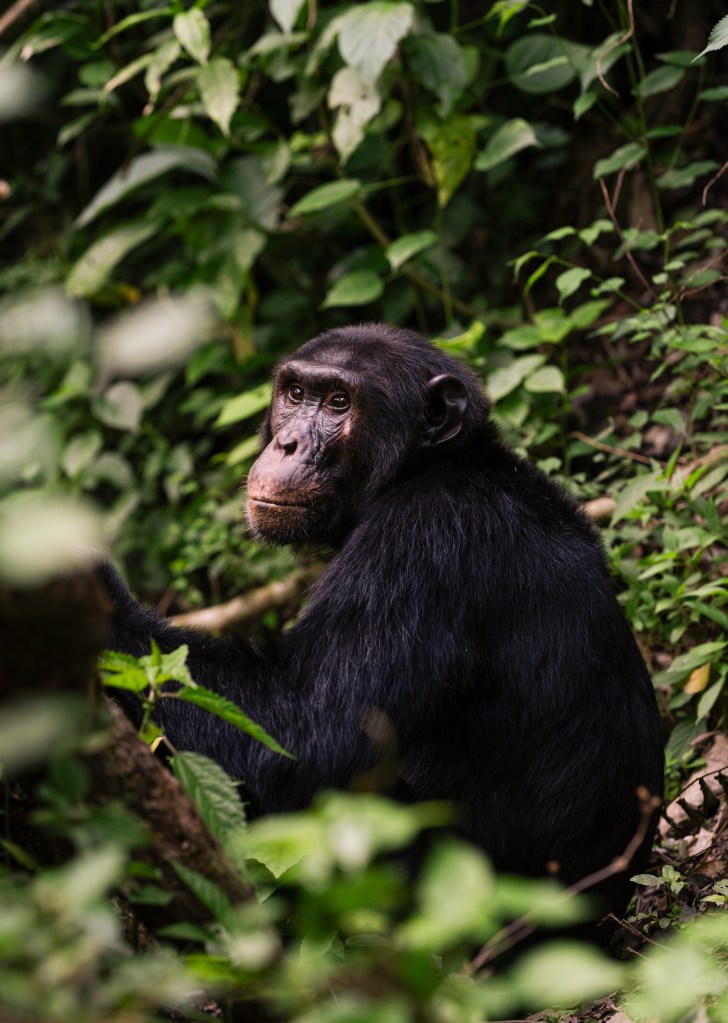
The climb back out was hard. My heart really got going, but we moved as a group, stopping for little breaks, chatting and keeping a steady pace. It didn’t feel like a race. I absolutely thought I should have stayed on the treadmill a little more before flying out to Uganda, but we made it. Sweaty, red-faced, still wearing far too many layers, and with no fire ants in sight.
By the time we reached Clouds, high on the edge of Bwindi Impenetrable National Park, the landscape had changed completely. Cooler, greener, mistier, more dramatic. What I had somehow missed, or maybe just not properly taken in, was that we had opted to hike the 14km Ivy River Trail to the lodge.
14 kilometres.
There are moments in life when you regret your breakfast choices. This was one of them. Maybe I should have had the porridge instead of the eggs benedict.
This time, I didn’t try to keep up straight away. I knew there would be a climb later and wanted something in reserve. I focused on my breathing: in through the nose, out through the mouth. About 30 minutes in, I found my rhythm.
Our guide would stop every so often and say, “Can we have one minute?” We’d stand still, breathing hard at first, then slowly noticing the forest around us: the damp earth, the birds, the mist, the green of it all. It felt like an accidental kind of forest bathing, a pause that was less about stopping and more about coming back to ourselves. Then he’d say, “Shall we try again?”
Fergus, who was with us throughout the trip, kept saying, “Two more corners.” At first this was comforting. Then suspicious. Eventually it was just funny, because every corner seemed to reveal another steep section. So did the women carrying huge sacks of tea leaves up those same hills. Watching them made me stop complaining quite so much.
When we finally reached Clouds, it really did feel like we were in the clouds. Roaring fires, enormous sofas, fresh food and the best hot shower of my life waiting at the end of 14 kilometres.
The next day was gorilla trekking. Straight off the back of that hike, I was nervous. What if my legs hadn’t recovered? What if we had to trek for hours? But my body had carried me through the gorge, the climb, the heat and the women with the tea leaves. Maybe it could do this too.
We hired porters to help with our bags on the forest trail, but also because it supports local families. As we approached the forest, rain came and went, making the descent slippery. Owen, our guide, told us the Posho family were near. After around 90 minutes of steep descent, we found them: 17 gorillas, led by the silverback Magara, whose name means “good health”.
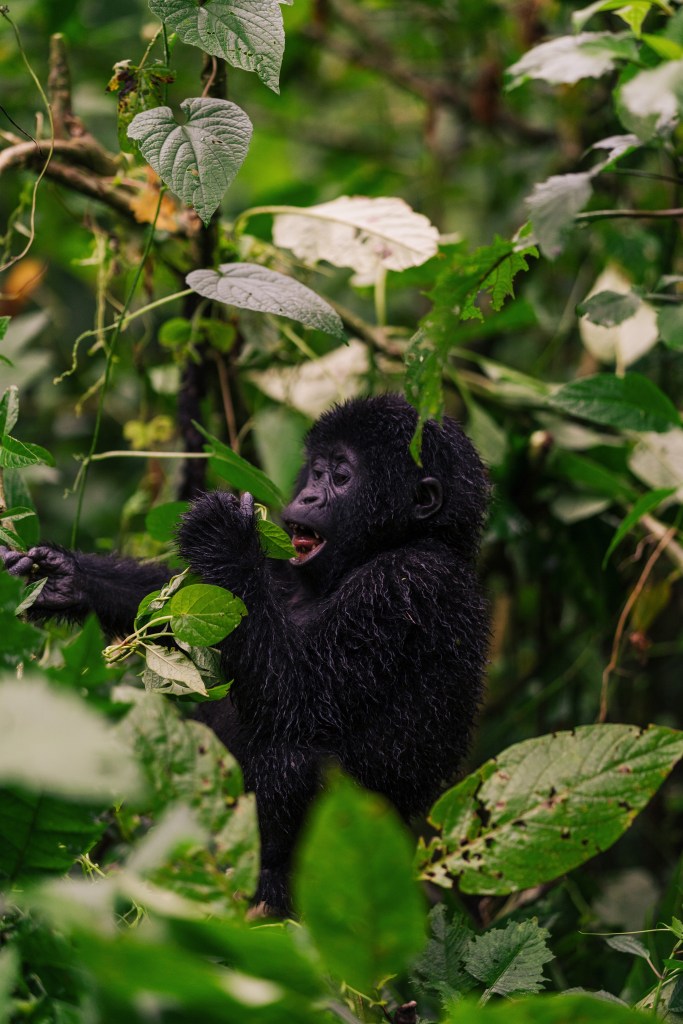
I thought I might cry. Instead, I felt completely calm. They were huddled in from the rain, grazing, moving slowly, just being exactly where they were supposed to be. I found myself matching their stillness without meaning to. It wasn’t dramatic. It was quieter than that. For that hour, everything else seemed to fall away.
The way back up was muddy, slow and not especially glamorous. But by then, something had shifted. We had done it. I had done it.
We ended the trip at one final camp, Semliki, and in a way it felt like the right ending. After everything our bodies had been through, Semliki offered something slower and softer. Birdlife, baboons below the balcony, stories around the fire pit and a gentler pace after a trip that had asked a lot of our legs.
I came to Uganda for the gorillas, but it was the people, the communities, the changing landscapes, the jokes, the “two more corners”, the “shall we try again?”, and all those moments in between that stayed with me just as much. I left feeling stronger, yes, but also more open. More aware of what my body can do when I stop fighting it in my head.
And despite my repeated claims, I did not perish.
What I’d Do Differently Next Time
- If you’re adding longer hikes, train for hills: Walking helped, but the climbs on our particular itinerary were what tested me.
- Take well-worn walking boots: The terrain can be steep, muddy, slippery and uneven.
- Do not double-layer for fire ants: Ever. Trust the anti-insect clothing.
- Use walking poles whenever offered: They were brilliant for steep descents and muddy climbs.
- Keep up with hydration: Hydration sachets were genuinely helpful in the heat and humidity.
- Stretch every morning: Boring, yes. Worth it, also yes.
Getting there
Uganda Airlines flies direct from London Gatwick to Entebbe, with fares from £635 return. See ugandairlines.com.
The trip
Hide & Seek Travel offers an 11-night Uganda journey from £16,500 per person, visiting Apoka Safari Lodge in Kidepo Valley, Kulu Ora at Murchison Falls, The River Station, Honey Bear Bush Camp in Kyambura, Semliki Safari Lodge and Clouds Mountain Gorilla Lodge in Bwindi Impenetrable Forest. The price includes full board, internal flights, gorilla and chimpanzee permits, guided activities and park fees. International flights are not included. Contact [email protected] or call 02891 246 560. See hideandseek.travelhttp://hideandseek.travel.
Where to stay
Wildplaces Africa operates the camps and lodges featured in this trip, including Apoka, Kulu Ora, The River Station, Semliki Safari Lodge, Papas Camp and Clouds Mountain Gorilla Lodge. See wildplacesafrica.com.
What to pack
Anti-insect clothing made a real difference. I packed Craghoppers’ NosiLife pieces, which are designed for hot climates and help protect against biting insects. See craghoppers.com.
Move, Recover, Breathe: Why Austria’s Alpine Wellness Hotels Shine In Summer