
The latest smart technology promises to be your new personal trainer, but can an AI fitness coach really replace human expertise – and should you let it? WF investigates…
We’ve all asked Google health and wellbeing questions, from ‘Am I drinking enough water?’ to ‘What’s the best exercise for flat abs?’, but now there’s a new player in the mix: artificial intelligence (AI). Once the stuff of sci-fi, AI is quickly becoming a fitness go-to, offering personalised meal plans, wellness strategies and tailored workouts. With platforms such as ChatGPT-5 answering complex questions in seconds, it’s tempting to sign up to the promise of having an always-available coach in your pocket, armed with an enormous amount of knowledge. But while smart tech can crunch data and track progress with precision, can it really replace the insight, accountability and human touch of a personal trainer? And if so, how much should we trust it with our health?
‘While smart tech can crunch data and track progress with precision, can it replace the insight of a PT?’
Instant advice
Right now, the AI fitness industry is worth around £7.4 billion and expected to surge to almost £250 billion in 2032. Fitness advice is also one of the top 10 reasons people in the UK use ChatGPT, whether it’s for a personalised meal plan, a bespoke workout routine or quick pep talk before the gym. The appeal is obvious: AI is accessible, personalised and affordable. Most of all, it’s convenient. Need a 20-minute core blast at 6am? Or a calming yoga flow before bed? AI-powered apps such as Fitbod and Freeletics adapt instantly, no diary syncing required. For busy women, that kind of flexibility can be a game-changer. ‘They have the ability to deliver customisation options, real-time adjustments, and personalised coaching,’ says Katy Reynolds, personal trainer and founder of Your Barre Studio (yourbarrestudio.com). ‘It’s like having a personal coach, but without the hefty price tag.’
AI can track progress over time and adapt workouts based on real results. ‘And yes, I do believe that you can get good outcomes with an AI PT, especially if you’re consistent and motivated’ adds Katy. ‘Many apps send reminders or celebrate milestones, which can help people keep on track and stay motivated. That said, it still relies heavily on the individual’s drive. For advanced techniques, injury rehab or detailed form correction, a real-life trainer will always have the advantage. And, while ChatGPT can be handy for workout ideas or quick guidance, it feels more like a supplement than a replacement for an in-person coach.’
Man vs machine
AI may be clever, but it can’t provide everything a person can. ‘I’m not convinced AI can ever fully replace the human element in fitness,’ says Michael Betts, director at TRAINFITNESS and a personal trainer with more than 35 years’ experience (train.fitness). ‘Training is about more than data and algorithms; it’s about motivation, accountability and connection. Great trainers aren’t just programme-writers; they’re part coach, part therapist and part cheerleader. They read your body language, adapt to your mood, push you when you need it, and hold you back when you’re overdoing it.’ One of the biggest gaps is form correction. ChatGPT can explain a perfect squat, but it won’t see your knees caving in or notice when fatigue makes your technique slip. At best, that limits your results; at worst, it risks injury.
There’s also the danger of misreporting your own fitness level. AI only knows what you tell it – if you overestimate your ability, the app may prescribe advanced movements before you’re ready, or fail to account for an old injury or mobility issue. And while some users like that AI feels less judgemental, it can also mean less accountability. You’re more likely to skip a session with an app than with a trainer waiting for you.
That doesn’t mean AI hasn’t a place in your plan. Betts believes it works best as a supplement rather than a replacement: ‘AI is phenomenal for things such as meal planning or tracking progress, but in my opinion long-term success in fitness is often built on relationships and social connection, and no app can replicate that.’
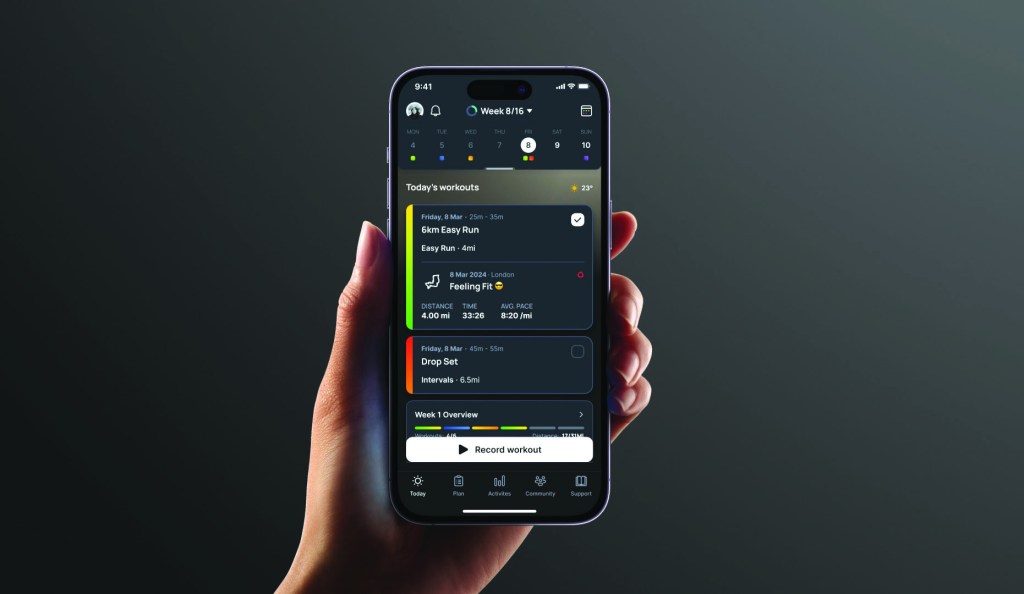
Here’s what happened when Women’s Fitness put AI to the test:
‘Curious to see what it was really like, I swapped some of my regular workouts for AI-led sessions. I’ve worked with personal trainers before, but this time I turned to Zing, an AI app that created a six-day strength plan I could follow at home. After sharing my stats and goals (just like you would with a PT), the app produced daily 45-minute sessions focused on high-energy, full-body strength. What impressed me straight away was the structure. My virtual coach, Chris, built in progressive overload automatically – increasing weights and intensity week by week, and tracking volume more consistently than I’d usually manage on my own.
‘The workouts were tough but efficient, leaving me glowing (and a little wobbly) in under an hour, but there were clear gaps. After a night of poor sleep and feeling pretty exhausted, Zing still had a heavy barbell session on the menu – something a real trainer would have adapted instantly. When my hip flexor felt sore after a long run, the app didn’t pick it up until I manually changed the plan. What was missing was that human touch; the ability to sense how you’re feeling, tweak your form on the spot or know when to encourage rest rather than more reps. Compared to working with a trainer, the difference was obvious: AI offered consistency, structure, accountability and a sense of progress, but I missed the connection. A trainer sees the whole you – your energy levels, mood and motivation – not just the data.
‘However, AI was far more effective than I expected. It works best if, like me, you’ve been training for years and know when to push back or adapt. But for beginners, confidence-building and form correction are best left to a real coach. My PTs have always offered emotional support and life guidance without even realising it, and I don’t think AI can replace that – at least, not yet.’
Want to get more from your AI coach? Be specific with your questions. Here’s how:
- Consistency: ‘I skip workouts when stressed. Build me an eight-week progressive home routine with dumbbells and cardio that adapts to busy days. Include strategies to beat excuses.’
- Nutrition: ‘Design me a protein-focused meal plan to hit 100g daily, with simple prep tips. Check in weekly, celebrate progress and explain the “why” behind each choice.’
- Mobility: ‘I sit all day. Create a 15-minute morning routine to ease hip and hamstring tightness.’