
Rain-soaked shoes, muddy leggings and a jacket that’s stopped repelling water? A few simple changes to your post-workout routine can help keep your kit in better condition.
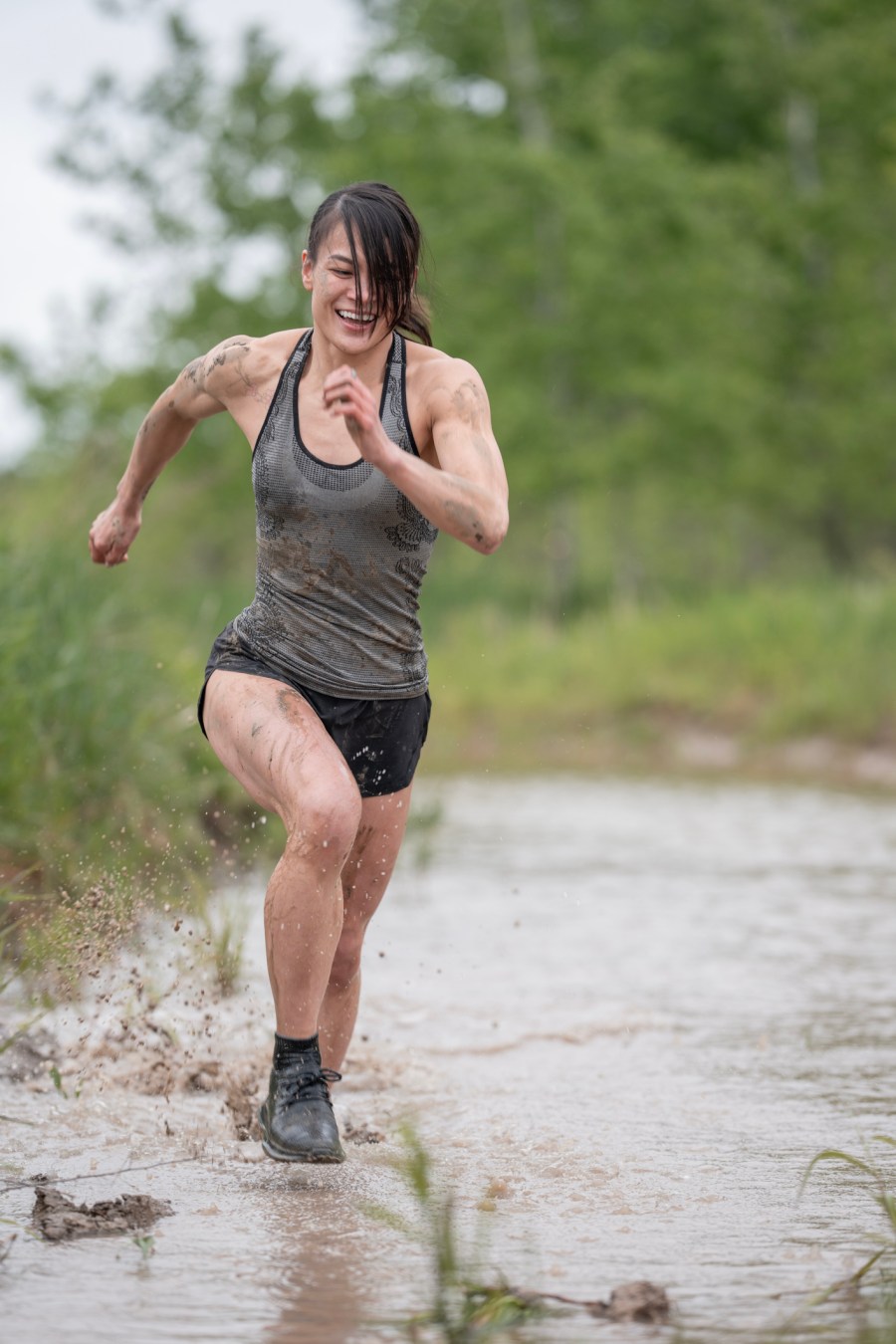
Getting out for a workout when it’s raining deserves some credit. Coming home with squelching trainers, damp socks and mud halfway up your legs is the less satisfying part.
The temptation is to put everything somewhere hot and deal with it later. Trainers on the radiator, leggings in the laundry basket, jacket over the nearest chair.
But the quickest-looking solution isn’t always the best for performance fabrics and footwear. Direct heat can damage shoes, while damp clothing left bundled together can develop unpleasant odours.
You don’t need an elaborate cleaning routine. Start by separating what needs washing from what needs drying, and check the care instructions before treating everything the same.
Take trainers off the radiator
Running shoes contain several materials joined together, and concentrated heat can affect their construction.
ASICS advises against drying running shoes in a tumble dryer, near a radiator or in direct sunlight. However tempting it is to speed things up, choose a shaded, ventilated spot away from direct heat instead.
Loosen the laces and open the tongues to help air reach inside. Remove the insoles if they’re designed to come out easily, and dry them separately. Don’t force out anything that appears glued in place. Set the shoes on a washable tray or towel so you aren’t leaving muddy water across the floor.
Draw out moisture, then give them time
Gently blot excess water before loosely filling your trainers with absorbent paper. Plain newsprint is useful, particularly with pale linings where printed ink could transfer.
Replace the paper when it becomes wet rather than leaving the same soggy bundle inside. Avoid packing it so tightly that you distort the shoe.
Brooks recommends stuffing wet shoes with newsprint and allowing them to air-dry away from heat and strong light. Depending on how soaked they are, drying may take a couple of days.
Check inside the toe box before putting the insoles back. An upper that feels dry doesn’t necessarily mean the whole shoe is ready.
If you already own another suitable pair, use those for your next session while the wet pair finishes drying.
Brush mud off gently
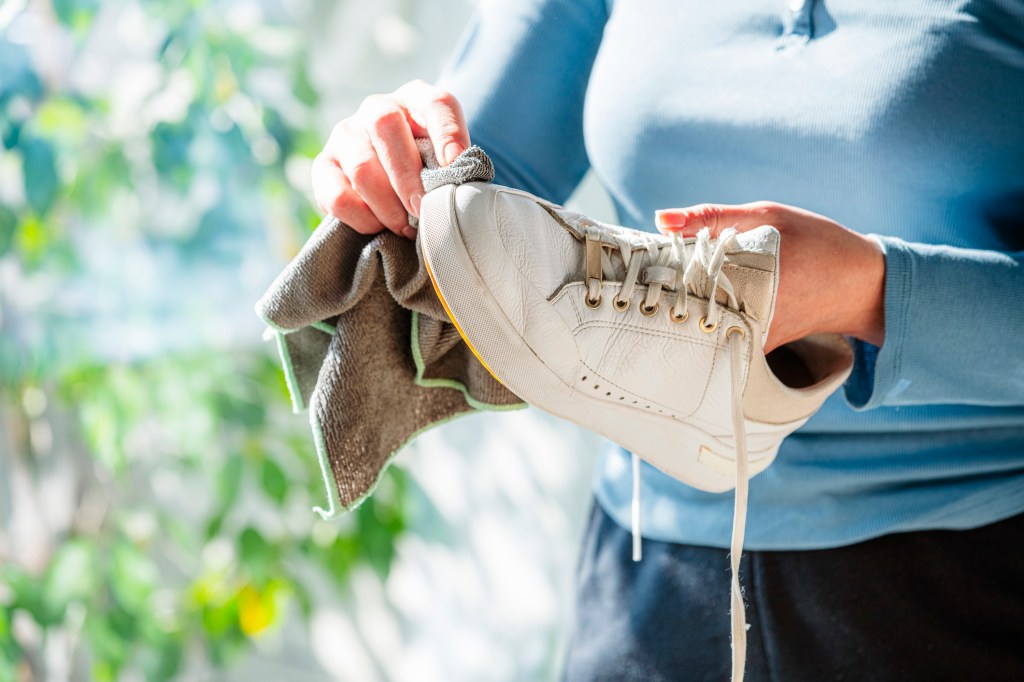
A muddy shoe doesn’t automatically need a trip through the washing machine, remove loose dirt with a soft brush, then clean remaining marks with a damp cloth or brush, following the manufacturer’s instructions. Pay attention to the grooves in the sole, where mud can collect.
Avoid soaking the entire shoe just to remove a small patch of dirt, Brooks advises against machine washing or tumble drying its running shoes because the process can stretch or warp them and compromise their materials.
Give removable insoles and laces their own clean where permitted, then allow every component to dry before reassembling.
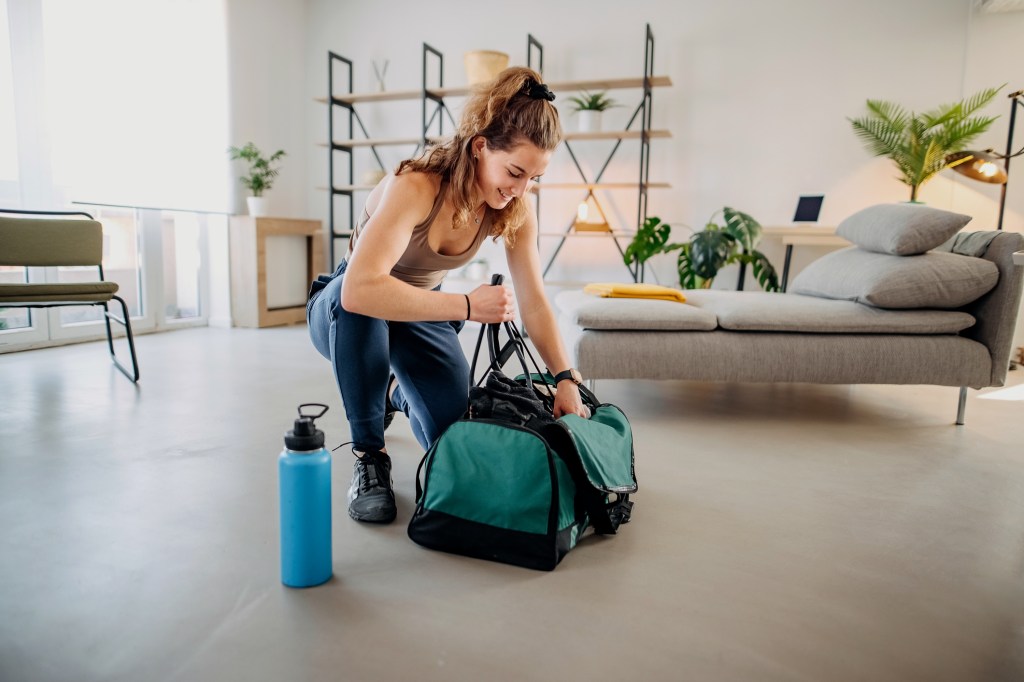
Empty your bag before you forget
Wet leggings and sweaty tops shouldn’t spend the evening zipped inside your gym bag, take them out when you get home. If you can’t wash them straight away, spread them over a drying rack rather than dropping them in a damp heap.
Air-drying between the workout and the wash helps avoid prolonged damp storage, but it doesn’t replace washing sweaty clothing.
Turn garments inside out and check their labels before choosing the temperature and cycle. Use the recommended detergent dose; pouring in extra can leave residue rather than delivering a better clean.
For synthetic workout clothing, Nike recommends avoiding fabric softener and dryer sheets, which can leave a build-up on the fabric.
Give stretch fabrics a gentler finish
After washing, remove clothing promptly and hang it with space between items. Unfold waistbands and separate layers so damp patches aren’t trapped.
Many performance garments are best air-dried. Where tumble drying is allowed, follow the specified setting rather than assuming hotter is better.
Nike advises avoiding high heat for performance fabrics such as Dri-FIT. Check that thick seams, padded sections and waistbands are dry before putting clothing away.
Treat waterproof jackets separately
Your running jacket may need different care from your leggings.
A waterproof garment’s outer fabric can lose its ability to make water bead and roll off. That doesn’t automatically mean the jacket needs replacing.
GORE-TEX explains that cleaning and appropriate drying can help restore the water-repellent finish. Some garments benefit from a specified heat treatment; others have different requirements, so follow the instructions for your particular jacket.
Before buying a reproofing product, check whether cleaning alone resolves the problem.
Make a little space for a wet kit before your next rainy workout: a tray for shoes, paper within reach and room on the drying rack. It makes the homecoming easier, and gives your trainers a better place to recover than the radiator.